
01.06.2026
Analysis of the Implementation and Effectiveness of Assigned Tasks for the Socio-Economic Development of the Republic of Karakalpakstan
In accordance with the first-quarter work plan, the Chamber of Accounts conducted an analysis of the implementation and effectiveness of the socio-economic development tasks assigned for the Republic of Karakalpakstan.
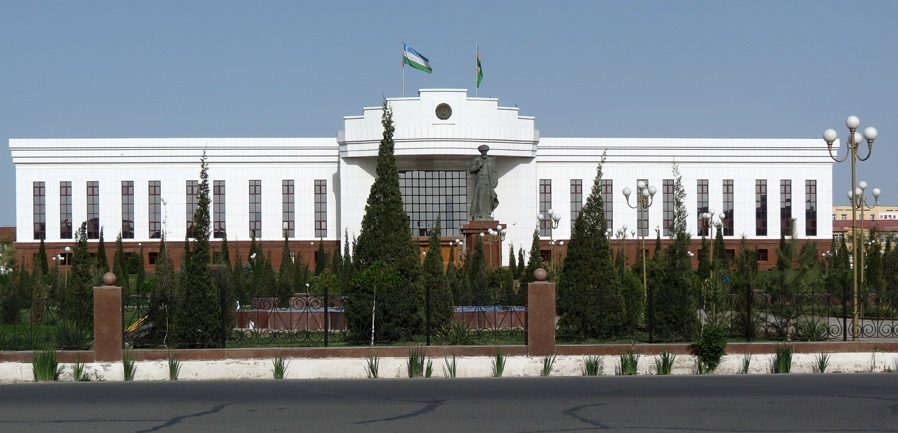
Over the past three years, five documents of the Head of State have been adopted to fundamentally improve the business environment and ensure accelerated regional development.
These include 2 Presidential Decrees — PF-129 dated 08.08.2023 and PF-10 dated 27.01.2025, as well as 3 Resolutions — PQ-66 dated 09.02.2024, PQ-248 dated 14.08.2025, and PQ-70 dated 21.02.2026.
Within the framework of these documents, particularly regarding the implementation of the 2025 target indicators, the following practical results were achieved in the region:
▪ the growth rate of the gross regional product reached 114.1 percent compared to 2022, exceeding the planned target;
▪ the growth rate of industrial production amounted to 110.5 percent during 2022–2025;
▪ the volume of services increased by 133.1 percent;
▪ exports reached USD 435.2 million, increasing by 123.4 percent compared to 2022;
▪ the volume of utilized foreign direct investment amounted to USD 472.7 million, increasing 11.6 times compared to 2022;
▪ due to over-fulfillment of the employment plan, the unemployment rate decreased to 5 percent (9.1% in 2022);
▪ 500 targeted quotas were allocated for youth to state higher education institutions and 200 quotas to non-state institutions;
▪ for the implementation of investment projects worth UZS 15.8 trillion, 1,547.6 hectares of land were directly allocated to 123 business entities;
▪ the number of foreign tourists tripled during 2023–2025 (from 117.9 thousand in 2023 to 405.8 thousand in 2025);
▪ through the development of domestic tourism, the number of local tourists reached 2.652 million in 2025 (1.095 million in 2023);
▪ the volume of tourism services reached USD 51.1 million in 2025, doubling compared to 2023 (USD 26.3 million);
▪ the number of tourist accommodation facilities (hotels, guest houses, hostels, and others) increased to 108, with a total capacity of 2,987 beds.
At the same time, the analysis shows that several shortcomings still remain in certain sectors. In particular:
➢ industrial production decreased to 84.1 percent in Nukus city and to 95 percent in Takhtakupir district during 2022–2025;
➢ a decline in export volumes was observed in Nukus city (98%) and Khojayli district (91%) in 2025;
➢ the implementation deadlines for 33 projects scheduled to be launched in 2024 (PQ-66 dated 09.02.2024) were repeatedly extended by the Government Commission.
In particular, the deadlines for 4 projects were extended 4 times, 10 projects — 3 times, and 19 projects — 2 times. As a result, 2,386 planned new jobs were not created.
➢ insufficient work was carried out to ensure efficient use of agricultural lands whose category had been changed.
Specifically, from 2022 to March 1 of the current year, the category of 15.2 thousand hectares of land was changed, of which 5.3 thousand hectares (35%) were allocated to initiators for designated purposes. The remaining 9.4 thousand hectares (62%) remained unused in local authority reserves, while 477 hectares (3%) were not returned to reserve status.
It should be noted that low precipitation levels and climate change are increasing pressure on water resources in the region year by year.
Therefore, in 2025, subsidies and other financial incentives totaling UZS 28.8 billion were provided to 109 agricultural enterprises and farmers for the introduction of water-saving technologies.
As a result, water-saving technologies were introduced on 75.2 thousand hectares of land (100% of the planned target).
Nevertheless, certain shortcomings in the efficient use of water resources were identified. In particular:
➢ 121 “Smart Water” devices (12%) have not transmitted any data since installation, while data transmission has stopped in 628 devices (63%);
➢ forecast indicators for drip irrigation technology were fulfilled by 75 percent;
Especially low indicators were recorded in Amudarya (59.6%), Khojayli (66.5%), Shumanay (54.5%), Kanlikul (53.5%), Karauzyak (15%), and Kegeyli (5%) districts.
➢ within the framework of digitalizing water accounting, it was planned to install 1,515 “Smart Water” devices during 2021–2024, while only 995 devices were actually installed (66%).
As a result of practical assistance provided during the study process, the implementation of 215 assignments was ensured and removed from monitoring. For example:
✓ 16 assignments related to funding allocation were fulfilled;
UZS 882 million was allocated for purchasing necessary equipment for the old 50-bed children’s hospital in Kungrad district, and the hospital was fully equipped and commissioned (Minutes No. 23 of the Administration Head dated 06.10.2025, paragraph 27).
✓ 19 assignments related to land, construction, and infrastructure were completed;
The work on concluding contractor agreements for 26 newly launched facilities was finalized (Resolution PQ-393 dated 27.12.2025, subparagraph 6-b).
✓ within the regional investment program, 57 promising projects worth UZS 128.5 billion with the potential to create 250 new jobs were formed;
✓ credit funds totaling UZS 130 billion were allocated for 455 projects.
Based on the study results, relevant proposals were developed regarding the identified problems and shortcomings. Discussions were also held with responsible officials, and necessary measures were determined to eliminate these issues and prevent similar shortcomings in the future.
More news
![[object Object]](https://back.ach.gov.uz/media/view/file_74fefdec9bcc7a4e33114bd9.JPG)
Chairman of the Chamber of Accounts of the Republic of Azerbaijan visits Uzbekistan
412
09.03.2026
![[object Object]](https://back.ach.gov.uz/media/view/file_34ca8b5cd7ed4a66ac391b33.jpg)
Kyrgyz Auditors: “The Conference in Tashkent Will Mark the Beginning of a New Era”
100
25.05.2026
![[object Object]](https://back.ach.gov.uz/media/view/file_c2643f9838d64ce8d5b16ca3.jpg)
A meeting was held in the Senate with the President of the Court of Audit of Slovenia
209
21.04.2026
![[object Object]](https://back.ach.gov.uz/media/view/file_37e702064360a39ab333516b.jpg)
Performance audit of development programs in Tashkent Region
1312
08.10.2025
![[object Object]](https://back.ach.gov.uz/media/view/file_803e686b67c15fd40f124d27.jpg)
Results of the audit of the Agricultural State Support Fund
417
25.03.2026