
10.04.2026
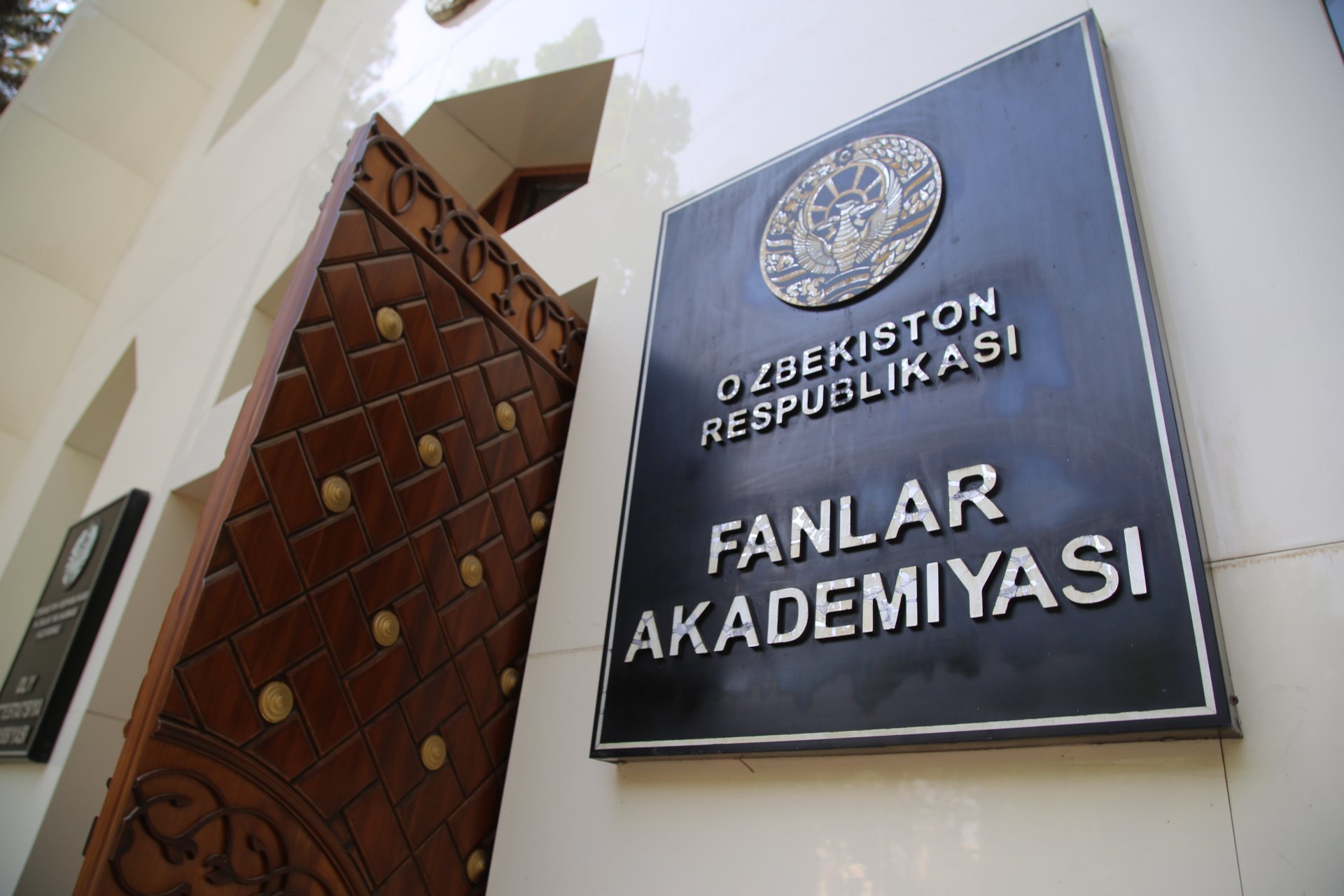
Results of the Performance Audit Conducted at the Academy of Sciences of Uzbekistan
The Chamber of Accounts conducted a performance audit of the Academy of Sciences and its affiliated research institutes for the period 2023–2025.

The Academy is a leading state scientific institution carrying out fundamental, applied, and innovative research in the fields of science, technology, culture, and education.
Certain work has been carried out by the Academy and its affiliated organizations in the fields of physical and mathematical sciences, engineering, chemical and biological sciences, as well as social and humanitarian sciences, and a number of positive results have been recorded.
A total of 1,506 researchers (including 392 Doctors of Science (DSc) and 630 PhDs) are employed across 43 scientific organizations under the Academy. Among them, 32 are academicians, 206 are professors, and 536 are senior researchers.
A total of 1,015 doctoral students graduated from the Academy’s research institutes, conducting research on important topics such as fundamental and applied sciences, innovative technologies, new materials, environmental sustainability, and socio-economic development.
Of these, 45% of the research relates to chemical-biological and medical sciences, 29% to physical, mathematical, and engineering sciences, and 26% to social and humanitarian fields.
The audit identified a number of systemic issues.
In particular:
1.Coordination of scientific activities and strategic development in cooperation with the authorized state body, as well as the identification of research topics relevant to the real sector, has not been properly established.
2.The Institute of Genetics and Experimental Plant Biology, which is a key tool for uncovering fundamental aspects of plant science, has limited its research to cotton, cereals, legumes, oil crops, and small-grain crops.
3.Out of all doctoral graduates, 510 individuals (50%) did not defend their dissertations, resulting in ineffective completion.
The highest non-defense rates were observed at the Institute of Chemistry of Plant Substances (38 individuals, 79%), the Institute of Physics and Technology (29 individuals, 81%), and the Institute of Oriental Studies (21 individuals, 100%).
4.Graduates did not conduct research in such priority areas as oil and gas field geology, digital and artificial intelligence technologies, robotics, automotive engineering, electrical engineering, and household appliance manufacturing. In some cases, similar projects are repeatedly initiated.
5.Support for young scientists’ international and scientific activities (publications, patenting) is insufficiently organized.
6.Although institute directors are appointed for a term of five years, there is no established system for evaluating their performance and suitability for their positions during this period.
Leaders of 25 research institutes (58%) have been serving for more than five years.
The audit also identified issues requiring solutions related to the selection of research topics, monitoring of results, commercialization, and the organization of strategic research aligned with the needs of the real sector.
An analysis of the “science – production – market” chain revealed several shortcomings and deficiencies. In particular:
-low level of research in priority areas such as industrial ecology, environmental protection, and the textile industry;
-due to ineffective cooperation with the Ministry of Health, the results of 26 applied research projects conducted by the Institute of Immunology and Human Genomics in 2021–2025 have not been implemented into clinical protocols and standards;
-no research has been conducted in priority areas such as oil and gas geology, digital and artificial intelligence technologies, and robotics.
In addition, based on international best practices, proposals and recommendations have been developed to address systemic issues in governance, research effectiveness, and digitalization, as well as to further improve overall performance.
Based on the audit results, relevant instructions were issued to enhance the effectiveness of scientific activities and the outcomes of research and development.
The audit results were discussed with responsible officials of the Chamber of Accounts , and measures were defined to eliminate systemic problems, errors, and shortcomings, prevent their recurrence, and further improve the efficiency of scientific activities.
More news
![[object Object]](https://back.ach.gov.uz/media/view/file_5968d0bda533283d4c577372.jpg)
President Shavkat Mirziyoyev: 2026 to become fundamental in developing all spheres
8316
25.12.2025
![[object Object]](https://back.ach.gov.uz/media/view/file_9ea9a786478ca25f73bcfde0.jpg)
Ministry of Water Resources: audit of instruction implementation
3122
03.10.2025
![[object Object]](https://back.ach.gov.uz/media/view/file_3d83e197ae37fa039e0d32ac.jpg)
New stage in improving public governance quality begins
315
23.05.2026
![[object Object]](https://back.ach.gov.uz/media/view/file_0209e740fd8485c962029a4d.jpg)
207
25.06.2026
![[object Object]](https://back.ach.gov.uz/media/view/file_fb558b2c0dd157e4c5af6f05.JPG)
Representative of the Chamber of Accounts participated in an international forum held in Baku
366
20.06.2026