
22.04.2026
Results of the Chamber of Accounts' activities for 2025 were reviewed
At a plenary session of the Legislative Chamber of the Oliy Majlis of the Republic of Uzbekistan held in Tashkent, the report on the activities of the Chamber of Accounts for 2025 was discussed. The session was attended by deputies, political party factions, and members of the Committee on Budget and Economic Reforms.
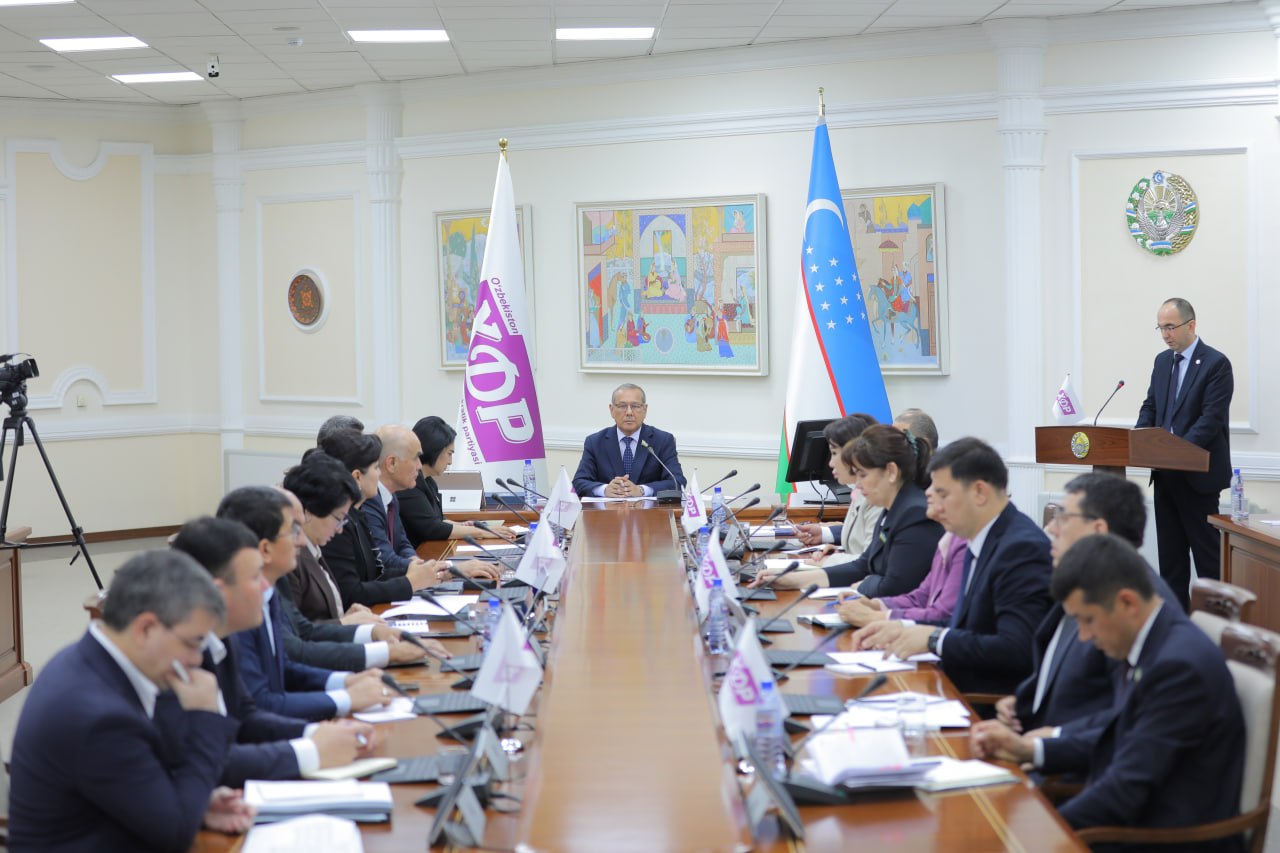
During the meeting, the effective cooperation between the Chamber of Accounts and the Legislative Chamber was particularly emphasized. It was noted that the Memorandum of Cooperation signed in 2025 played an important role in improving the lawmaking process, expanding public participation, and ensuring systematic analysis of socio-economic processes.
First Deputy Chairman of the Chamber of Accounts M. Abdullaev highlighted that reforms in the system of public audit and financial control have reached a new stage. He also noted that, based on Presidential decrees, the Chamber of Accounts is transforming from a traditional oversight body into an institution focused on strategic analysis and preventive approaches.
It was emphasized that the introduction of digitalization, risk analysis, and remote audit mechanisms has strengthened control over the targeted and efficient use of budget funds.
In 2025, 93 audit activities and 62 thematic and remote risk analyses were conducted. As a result, violations involving 18.8 trillion soums were prevented, expenditures were optimized, and additional revenue sources were identified.
The Chamber of Accounts also actively participated in the formation of the State Budget. The draft budget for 2026 was reviewed, leading to increased revenues and reduced expenditures. Local budget drafts were examined to ensure financial balance in the regions.
The report also covered audit results related to budget execution, public procurement, investment projects, and external debt usage. Violations in public procurement were identified, and proposals were developed to enhance competition and transparency.
Systematic efforts were undertaken to reduce the shadow economy, increase tax revenues, and expand the revenue base. Additional revenue sources were identified and collected.
Digitalization was defined as a priority area, with the “Remote Audit” system widely implemented to enable real-time monitoring and early detection of financial irregularities. The introduction of AI technologies further improved detection efficiency.
Significant progress in international cooperation was also noted, including expanded relations with foreign Supreme Audit Institutions and the implementation of joint audits and experience exchange.
At the conclusion of the session, the Chamber of Accounts' performance for 2025 was positively assessed.
More news
![[object Object]](https://back.ach.gov.uz/media/view/file_41b327bb2354d3df257914b7.JPG)
The First Parallel Session of the Conference Was Held on the Topic: “Information Technology Audit: Assessing Information Systems in a Digital Environment, Risk Management and Control Mechanisms”
149
23.05.2026
![[object Object]](https://back.ach.gov.uz/media/view/file_0a4cb1ce52541ec4e5c44be7.jpg)
Uzbekistan’s President outlines priority areas for practical regional cooperation within the new format
1290
15.11.2025
![[object Object]](https://back.ach.gov.uz/media/view/file_84978c94c7dc24317a6a15f8.jpg)
Briefing on the COA’s activities for the first nine months of 2025
1748
05.11.2025
![[object Object]](https://back.ach.gov.uz/media/view/file_49549c9e767b1f7690e8f710.png)
Performance audit of the innovation sector and the Science Financing and Innovation Support Fund.
351
12.04.2026
![[object Object]](https://back.ach.gov.uz/media/view/file_b802463fa079e7fe3e4fc61c.jpg)
Foundations of the Organization of Supreme Audit Institutions of Turkic-speaking States (TURKSAI)
1122
23.11.2025