
15.11.2025
Uzbekistan’s President outlines priority areas for practical regional cooperation within the new format
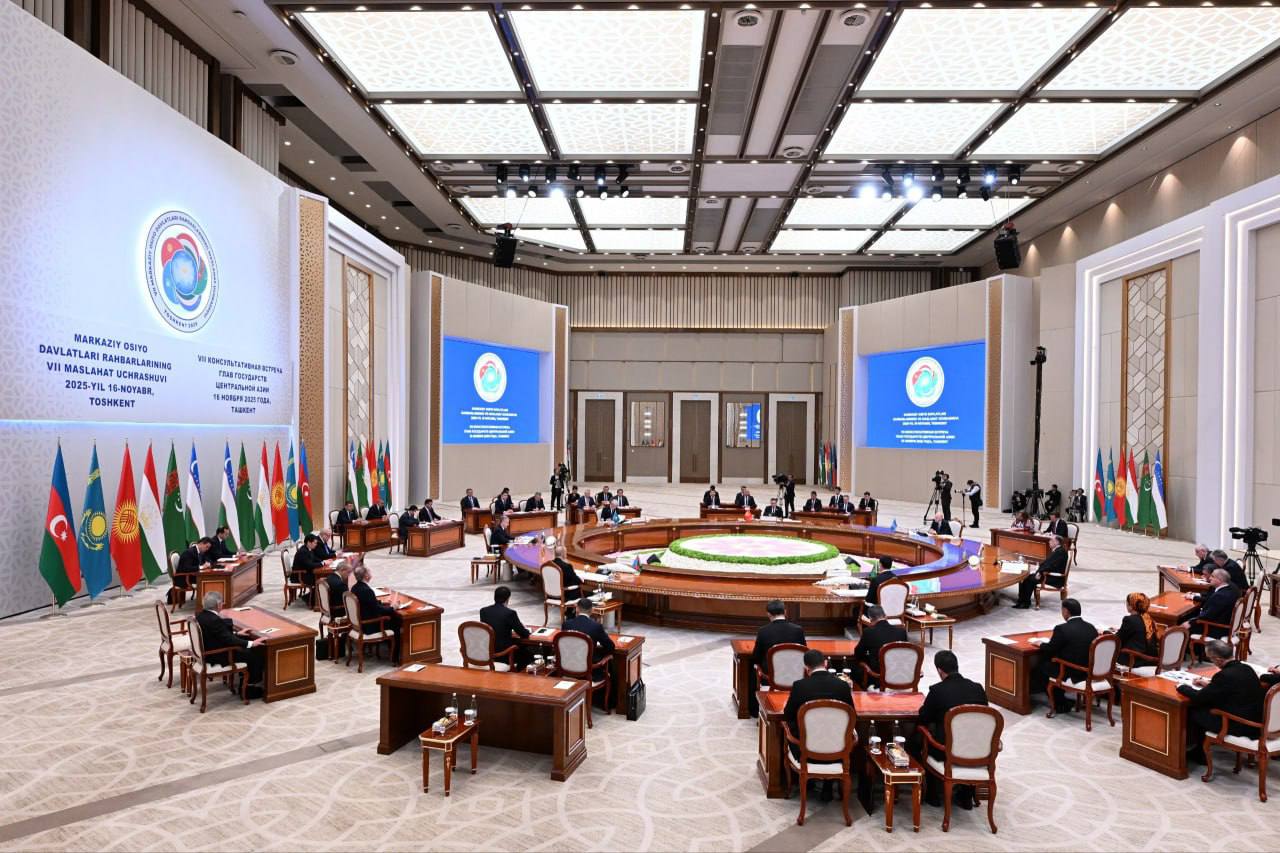
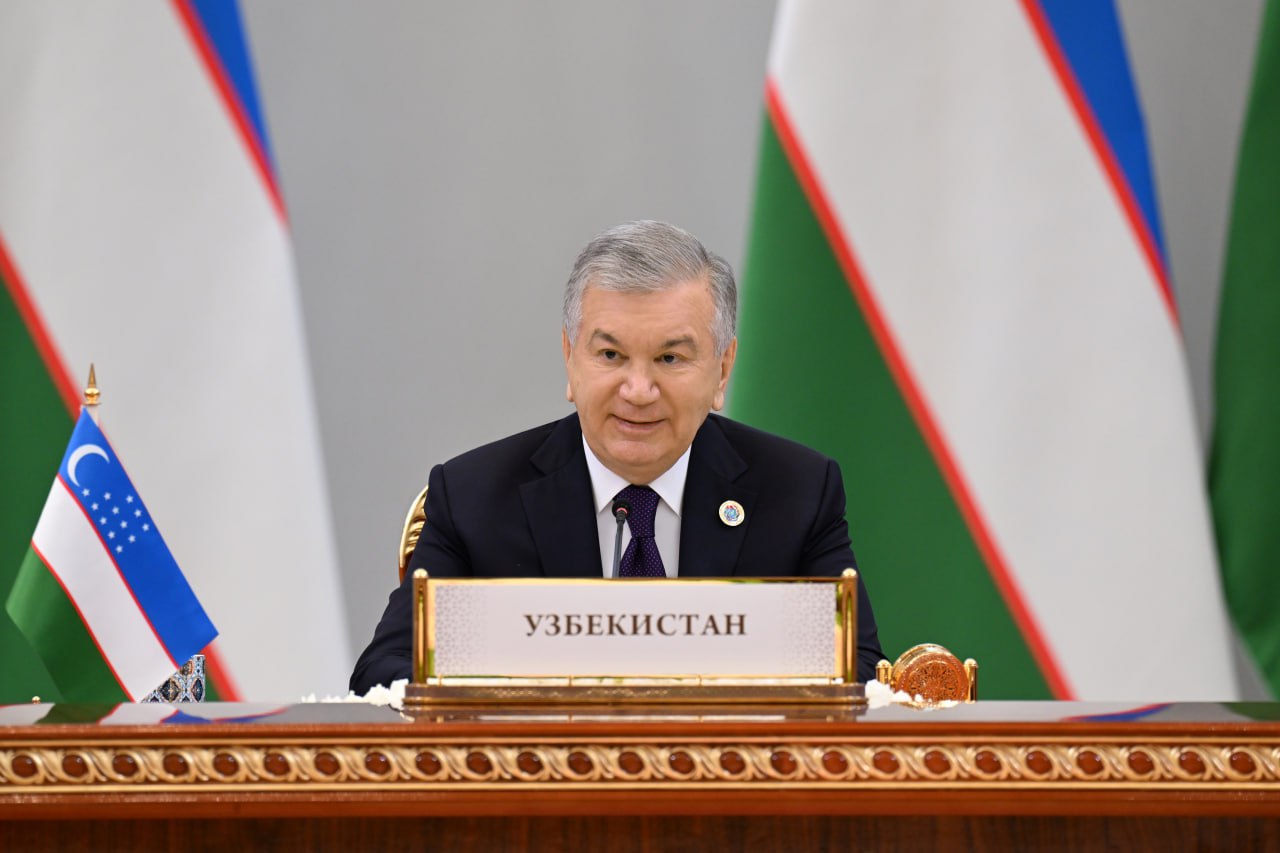
The seventh Consultative Meeting of the Heads of State of Central Asia was held under the chairmanship of the President of the Republic of Uzbekistan Shavkat Mirziyoyev.
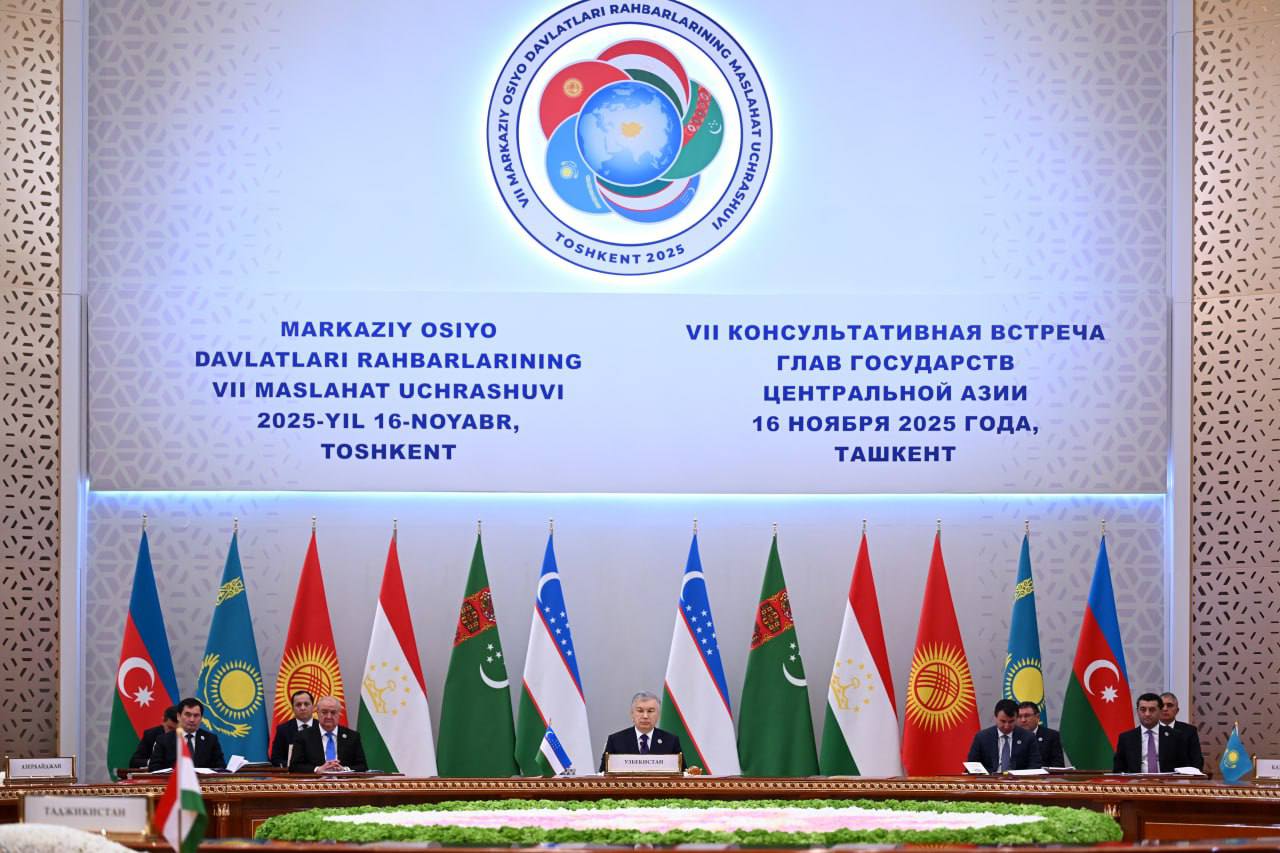
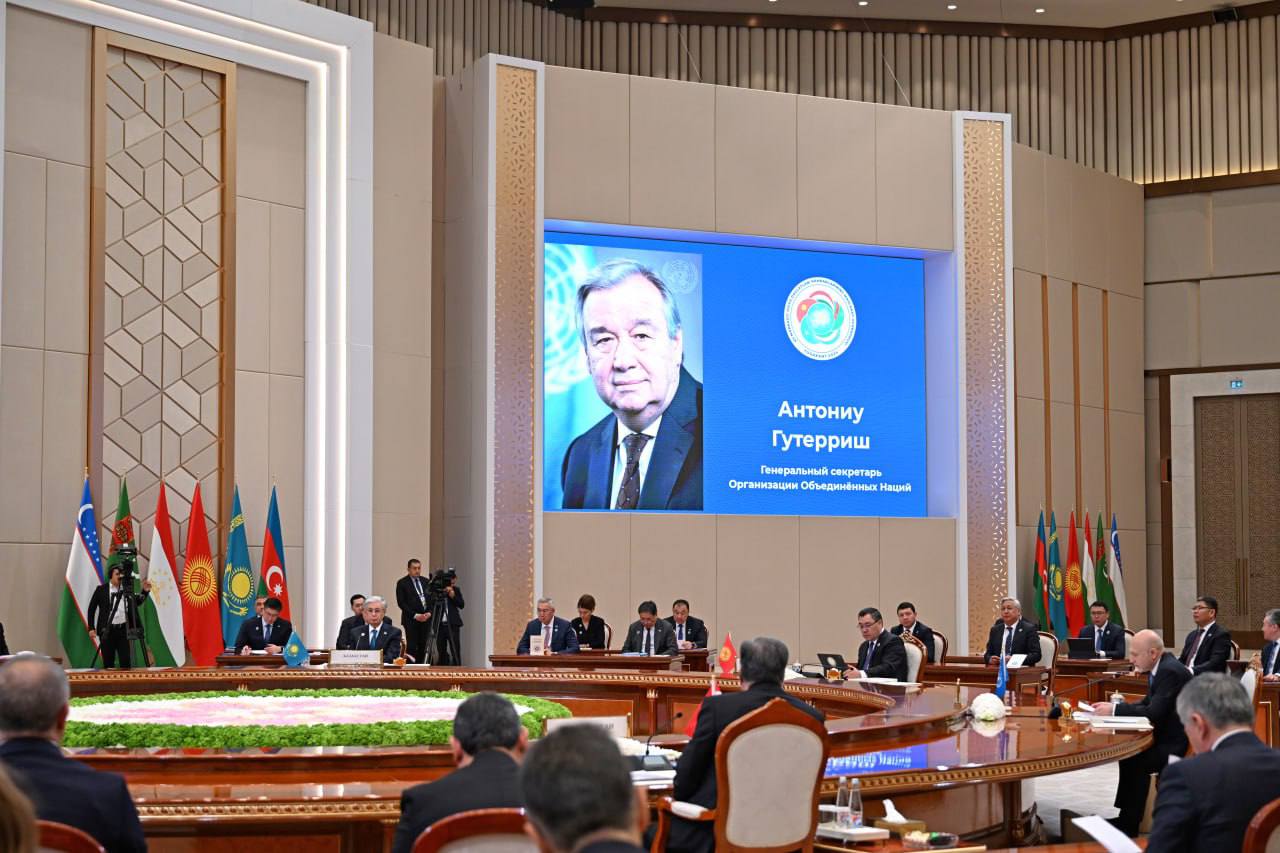
The summit was attended by President of the Republic of Azerbaijan Ilham Aliyev, President of the Republic of Kazakhstan Kassym-Jomart Tokayev, President of the Kyrgyz Republic Sadyr Japarov, President of the Republic of Tajikistan Emomali Rahmon, President of Turkmenistan Serdar Berdimuhamedov, as well as the head of the UN Regional Centre for Preventive Diplomacy for Central Asia Kaha Imnadze.
Issues of further strengthening regional cooperation, as well as the implementation of joint projects and initiatives in priority areas, were considered.
In the beginning of the summit, the Head of our state announced with satisfaction Azerbaijan's accession to the Consultative Meeting format as a full-fledged participant. As the Leader of Uzbekistan emphasized, this decision fully meets the interests of our peoples, who are strongly connected by a common history, ties of kinship, spiritual and cultural affinity.
He also expressed confidence that this strategic step will provide strong momentum to the Consultative Meetings, open new horizons for expanding trade, economic, investment, cultural, and humanitarian cooperation, as well as for developing consolidated solutions on issues of sustainable development.
- In essence, we will build a strong bridge between Central Asia and the South Caucasus and pave the way for the formation of a single space of cooperation, which will undoubtedly strengthen the strategic interconnectedness and stability of both regions, - noted President Shavkat Mirziyoyev.
The Leader of Uzbekistan then gave a brief assessment of the integration processes in the region in recent years. It was emphasized that thanks to open dialogue and active joint efforts, effective solutions have been found for a range of problems crucial to the region.
Territorial issues have been finally settled, border crossing points have opened, mutually beneficial cooperation in the water and energy sector has been established, transport links have been restored, and favorable conditions have been created for active trade, investment, and humanitarian contacts.
The region is rapidly integrating into the global economy: its investment attractiveness is growing, export opportunities to third-country markets are expanding, and its transit potential is increasing. Last year, the volume of mutual trade among the region's countries reached $10.7 billion, and the total volume of investment in Central Asia increased by 17%.
Systematic measures are being taken to ensure security and stability and to counter the threats of terrorism, extremism, and transnational crime.
The region's stature as an international actor is being strengthened and its role in global affairs is increasing. Cooperation in the “Central Asia Plus” formats is intensifying, and the region is presenting a unified position on influential international platforms.
The leader of our country then put forward a number of initiatives to further strengthen regional cooperation.
Primarily, it was proposed to transform the current meetings from a consultative form of regional dialogue into the “Community of Central Asia” strategic format. It was noted that the first steps towards this could be the development of regulations on Consultative Meetings, the establishment of a Secretariat operating on a rotational basis, and the upgrading of the status of national coordinators to special representatives of the presidents.
The President also advocated for the creation of a Council of Elders composed of respected public figures with rich life experience, which would help strengthen ties between generations and reinforce regional solidarity and identity.
The leader of Uzbekistan highlighted the priority of reaching a qualitatively new level of trade, economic, and investment cooperation, which would allow for a 1.5 to 2-fold increase in the volume of mutual trade and total foreign trade turnover in the medium term.
The importance of eliminating administrative barriers, simplifying tax and customs procedures, and jointly using free economic and industrial zones was emphasized.
Furthermore, the need to adopt a Declaration on a common investment space to form a unified investment climate in the region was noted. The demand for developing a Program of Joint Measures for the Development of e-commerce was pointed out, aimed at harmonizing approaches in this area, creating virtual trading platforms, and establishing reliable digital payment systems.
The critical importance of the joint development of high-tech regional infrastructure and transport and logistics potential for the region's future was specially highlighted.
More news
![[object Object]](https://back.ach.gov.uz/media/view/file_917e73b3b80a3f68bc1183f9.jpg)
COA strengthens cooperation with the INTOSAI Development Initiative
2164
28.09.2025
![[object Object]](https://back.ach.gov.uz/media/view/file_e69671e1443f6ba46bb3b59c.jpg)
President identified additional opportunities to support youth initiatives
1117
23.02.2026
![[object Object]](https://back.ach.gov.uz/media/view/file_1ccfa3db3d276600090c5972.jpg)
HOLIDAY GREETING
244
26.05.2026
![[object Object]](https://back.ach.gov.uz/media/view/file_1b49450df6e1a5c0310cc667.jpg)
In the first quarter of the current year, the Accounts Chamber conducted a comprehensive assessment of the measures being implemented for the socio-economic development of the Namangan region.
232
27.04.2026
![[object Object]](https://back.ach.gov.uz/media/view/file_95b7cea0d789a91bdb82a472.jpg)
The Accounts Chamber signed a memorandum with KPMG Academy.
1716
09.02.2025